Updated dietary guidelines for Americans
Every 5 years, new dietary guidelines are released to reflect new research findings and stay relevant to the evolving health of the US population. The guidelines released in January 2026 were heavily politicized which can make it difficult to interpret the recommendations objectively. In my opinion, there is no one-size-fits-all diet for everyone, so it is important to interpret these as what they are called - guidelines, rather than rules or standards. Adjust to fit your individual needs.
We have seen different visual aids for the dietary guidelines over the years, from the historic food pyramid to the My Plate graphic more recently. This time, an inverted food pyramid was used. What you’ll notice about this new food pyramid is that everything on it is a whole food. This means it’s usually composed of one ingredient. The inverted food pyramid suggests that if we are buying/eating foods that don’t look like this, perhaps they are worth questioning because they probably contain additives that don’t serve our needs.
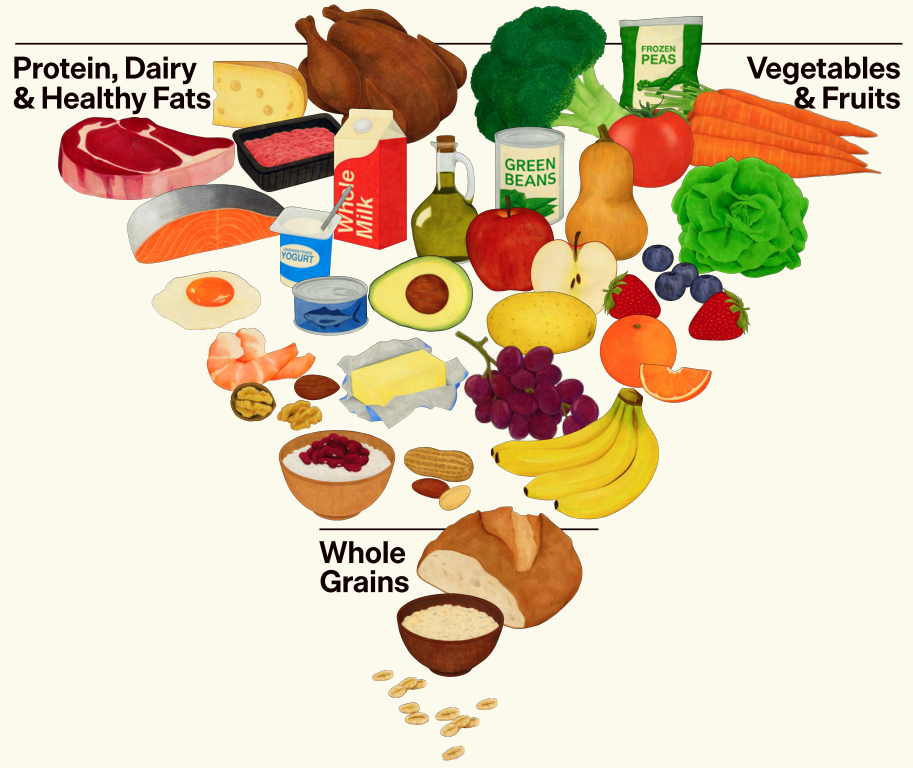
The inverted food pyramid.
Here are the major changes with these new guidelines:
Heavier emphasis on protein intake. The recommended daily amount went up to 1.2-1.6 grams per kilogram of body weight.
No added sugars are recommended
Full fat dairy is accepted
There are also some similarities to prior guidelines:
Limit saturated fat intake to <10% of total daily calories
Eat whole grains and avoid refined/processed carbohydrates
There is individualized advice for certain groups: infants, toddlers, breastfeeding women, pregnant women, and the aging population
My biggest takeaway from these updates is the protein recommendations, and I think this is a huge step in the right direction. Research has consistently shown that Americans need more protein. Protein is a critical component of every cell in the human body. There is a growing body of evidence that is showing how important skeletal muscle is when it comes to the aging process and preventing chronic disease. Dietary protein supports maintenance and growth of skeletal muscle. The recommended daily amount of protein is now 1.2-1.6 grams per kilogram of body weight, and this should be calculated based on your ideal body weight. If you are overweight, then you should use your ideal or “goal” weight to calculate protein needs. For example, if your ideal body weight is 150 lbs, this is 68 kg. 68 kg x 1.2 grams = 82 grams. Your daily protein goal is a minimum of 82 grams. If you are looking to build muscle mass, then your protein goal should be higher, using a conversion factor of 1.6-2 grams per kilogram (or more in certain cases).
These guidelines have been criticized for allowing full fat dairy, and this is because full fat dairy tends to carry saturated fat. It is still recommended to keep saturated fats as less than 10% of total daily calories. In reality, most of the saturated fat in the American diet is actually coming from foods that should not be part of their diet at all - things like pizza and baked goods (cakes, cookies, etc) which often contain lots of added sugars as well. Full fat dairy can look like 4% milkfat cottage cheese or whole milk Greek yogurt, both of which are excellent sources of protein and often have no added sugar.
Lots of resources exist for helping people make changes to their nutrition, and this can feel overwhelming. No two people are the same, so it is important to find something that works for you. This can take time, and you might not get it right on the first try. If you’re just getting started, here are some quick tips:
Use some type of tracking app for 2-4 weeks before you make any changes. This process can be insightful - you learn how much you’re actually eating, and what’s in your food. Tracking is tedious so you don’t need to do it forever. Learn where you can make changes.
Prioritize your protein. Aim for at least 30 grams of protein at each meal, and build the meal around the protein source.
At the beginning of each week, plan your meals out. When you get busy during the week, it feels easier when your food is already planned. Avoid decision fatigue.
Temptations are everywhere. Convenience foods, celebrations, junk food at your workplace…keep your goals in mind and prepare your food ahead of time.
Change is hard, but it can be easier with the right support. Nutrition is a staple of the care I provide at Fortis. Reach out if you have questions.
Read the full dietary guidelines here.
